Travel guides
The Cordoba Mosque-Cathedral for Muslim Visitors: History, Prayer and Where to Go Next
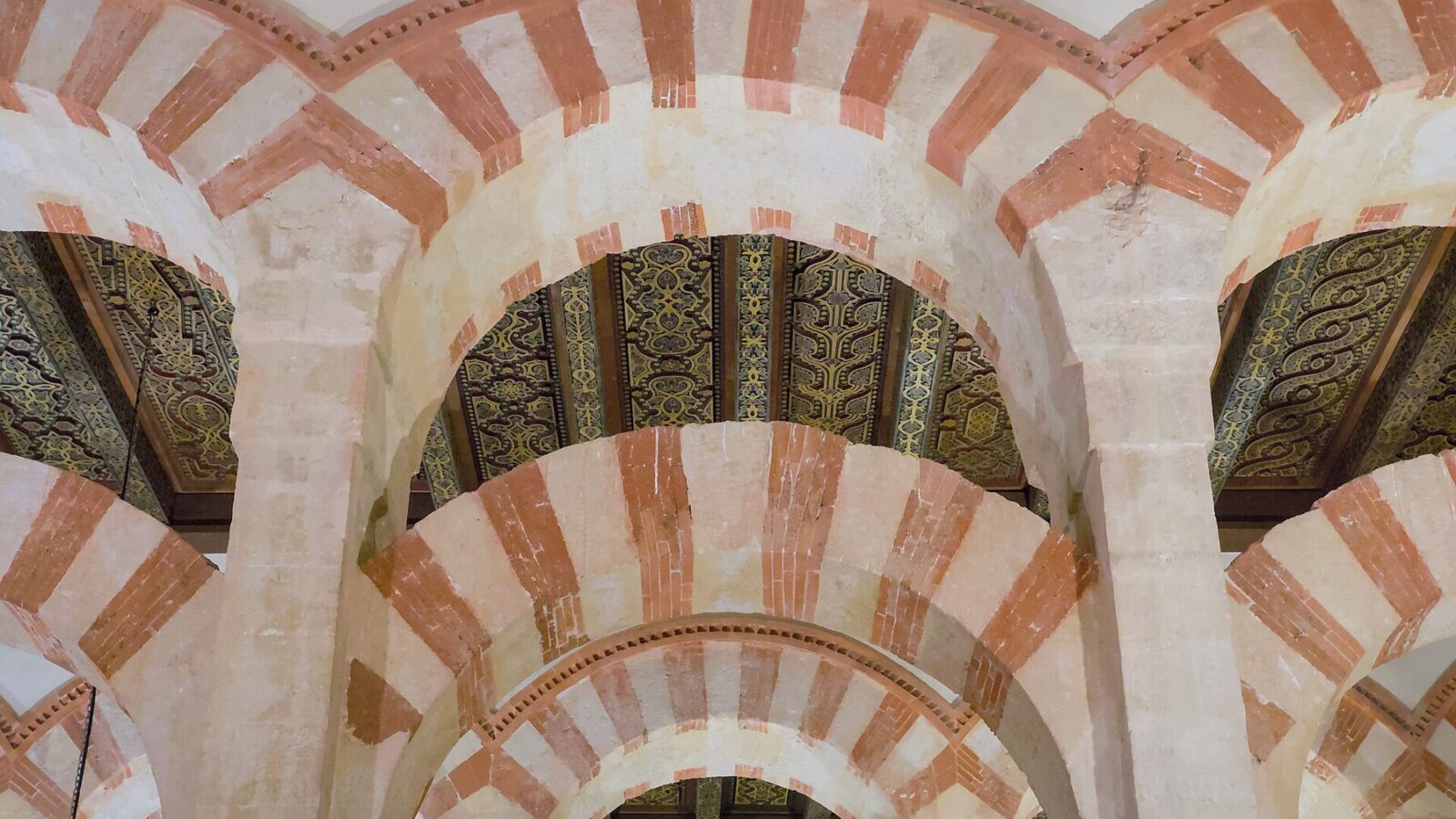
The Cordoba Mosque-Cathedral is the great mosque of the Umayyads of al-Andalus, begun under Abd al-Rahman I in the 780s and enlarged over two centuries, with a Catholic cathedral built in its heart from 1523. Muslim visitors can walk through the forest of arches and stand before the mihrab, but Islamic prayer is not permitted inside. Here is what to know before you go, where to pray in Cordoba, and why Madinat al-Zahra belongs on the same trip.
A short history of the Great Mosque of Cordoba
Abd al-Rahman I, the Umayyad prince who escaped the fall of his dynasty in Damascus and became the first emir of al-Andalus in 756, ordered the mosque around 785. The monument’s own history dates the first building to 786-788: a prayer hall of eleven naves running towards the qibla wall, with the famous double arches of red brick and white stone. His son Hisham I added the first minaret in 788.
As Cordoba grew into one of the largest cities of its time, each generation enlarged the mosque:
- Abd al-Rahman II (833-848) added eight naves to the south and enlarged the ablutions courtyard.
- Abd al-Rahman III, the first caliph of Cordoba, built a new and much taller minaret in 951-952. Its remains are still inside today’s bell tower.
- Al-Hakam II (962-966) extended the prayer hall again and built a new qibla wall, the maqsura and the mihrab that visitors come to see.
- Al-Mansur (Almanzor), the powerful chamberlain, carried out the last and largest enlargement in 991-994, extending the mosque to the east.
When Ferdinand III of Castile took Cordoba in 1236, the mosque was consecrated as a church, with the dedication Mass held on 29 June 1236. For almost three centuries the Islamic structure was left largely intact, with chapels added along the walls. In 1523, under Bishop Alonso Manrique, work began on a Renaissance cathedral nave and transept in the centre of the prayer hall. The building was declared a UNESCO World Heritage Site in 1984.
The mihrab of al-Hakam II
For many Muslim visitors this is the moment of the visit. The mihrab built under al-Hakam II is not a simple niche but a small octagonal room, framed by a horseshoe arch covered in gold and coloured glass mosaics and Kufic inscriptions with verses of the Qur’an. In front of it, the domes of the maqsura, the enclosure reserved for the caliph, are among the finest ribbed domes of the Islamic world.
Two details are worth knowing. First, the qibla wall of the Cordoba mosque faces south rather than towards Makkah, a feature scholars still discuss. Second, the mosaics survived because for centuries they were hidden behind the altarpiece of a Christian chapel; they were restored in 1816. Take your time here. The mihrab area is usually busy, so come early or late in the day if you want a quieter moment.
The cathedral inside the mosque
Walking through the arches, you suddenly reach the cathedral: a tall Renaissance and Baroque space with choir stalls, a high altar and a ceiling far above the low horizontal lines of the mosque. Construction took more than two centuries, so styles mix. Many visitors find this contrast the most striking part of the building, whatever their faith.
It helps to understand how the building works today. It is the cathedral of the Catholic diocese of Cordoba, managed by its Cathedral Chapter, with daily Mass and Sunday services. It is also one of the most visited monuments in Spain. The same building is a place of worship for some and a museum of Islamic art for others, and visiting with that in mind makes the experience calmer and more meaningful.
Can Muslims pray inside the Mezquita?
No. The official visitor regulations of the Mosque-Cathedral state that the use of the site is restricted to Catholic religious worship and to tourist and cultural visits. Salah, individual or in a group, is therefore not allowed inside. This has been the position of the diocese for many years, and it is best respected quietly: the mihrab can still be a place for reflection and du’a in your heart, and for remembering the people who prayed here for more than four centuries.
Our advice is simple: pray before you enter and plan your visit between prayer times. The rules also ask visitors to:
- Speak quietly and keep silence during Mass.
- Wear appropriate clothing and remove hats when entering.
- Keep your shoes on: entering barefoot or removing footwear inside is not permitted.
- Avoid filming or photographing liturgical celebrations.
Check opening hours and tickets on the official Mosque-Cathedral website before your visit, as hours change on special religious days. There is also a free early-morning visit from Monday to Saturday, except on feast days, which is a good chance to see the arches with fewer people.
Where to pray in Cordoba
The best-known mosque for visitors is the Al-Morabito Mosque (Mezquita Al-Morabito) in the Jardines de Colón, in the north of the historic centre and within walking distance of the old town. It reopened as a mosque for the local Muslim community in 1992 and is still active today. Friday prayer and opening times are set locally and can change, so confirm them when you arrive or ask us before your trip.
Outside the mosque, the most practical option is to pray at your hotel or apartment and plan the day around prayer times. If you travel with us, we can plan the itinerary around prayer times. For food, see our halal travel guide, which explains how to find halal options and what to ask.
Madinat al-Zahra: the caliph’s city outside Cordoba
A few kilometres west of Cordoba, at the foot of the Sierra Morena, lie the ruins of Madinat al-Zahra (Medina Azahara in Spanish). Abd al-Rahman III began building this palace-city around 936 as the seat of the new Caliphate of Cordoba, and work continued under al-Hakam II. It housed the court, the administration, gardens, workshops and its own mosque.
The city lasted less than a century. During the civil war (fitna) that broke the caliphate, it was sacked between 1010 and 1013 and then abandoned. Excavations have brought back terraces, reception halls and carved stonework. On 1 July 2018 UNESCO inscribed the “Caliphate City of Medina Azahara” as a World Heritage Site.
Visiting both on the same trip makes sense: the Mezquita shows the religious heart of Umayyad Cordoba and Madinat al-Zahra shows its political ambition. Start at the site museum before going up to the ruins, and allow at least half a day.
How to fit it into your trip
One full day in Cordoba covers the Mezquita, the old Jewish quarter around it and the Roman bridge over the Guadalquivir. A second day lets you add Madinat al-Zahra without rushing. Our Cordoba of the Caliphs tour is built around exactly these two days. If you want Cordoba as part of a wider route, the Golden Triangle tour links it with Seville and Granada in five days, and the Al-Andalus Grand Tour adds Toledo and Ronda. For background, read our page on the history of al-Andalus.
Frequently asked questions
When was the Cordoba Mosque-Cathedral built?
Abd al-Rahman I ordered it around 785, and the first building dates to 786-788. It was enlarged under Abd al-Rahman II, al-Hakam II and al-Mansur until 994, and the cathedral nave was begun in 1523.
Is prayer allowed inside the Mezquita?
No. The official rules restrict use of the building to Catholic worship and to tourist and cultural visits. Pray beforehand, at the Al-Morabito Mosque or at your accommodation.
Is there a mosque in Cordoba?
Yes. The Al-Morabito Mosque in the Jardines de Colón is an active mosque within walking distance of the old town. Confirm Friday prayer times locally.
Is Madinat al-Zahra worth visiting?
Yes. It was the caliph’s palace-city, founded around 936, and has been a UNESCO World Heritage Site since 2018. It pairs naturally with the Mezquita.
Cordoba is best seen slowly, with time to pray, eat well and return to the arches at a quiet hour. Tell us your dates and who is travelling, and we can plan this for you as a private or small-group tour. Our team speaks English and Arabic: get in touch here, or ask about a tailor-made trip.