Finding halal food in Granada is easier than in most Spanish cities. The old Muslim quarter, the Albaicin, and the streets around Calderería Nueva are full of teahouses and North African and Middle Eastern kitchens, many run by Muslim families. The key is knowing how to check what you are told: look for a recognised certificate, ask the right questions, and be careful with hotel breakfasts.
Why Granada is one of the easiest cities in Spain for halal food
Granada was the capital of the last Muslim kingdom of al-Andalus until 1492, and in recent decades it has again become home to a visible Muslim community, including Spanish converts and families from Morocco and other parts of the Muslim world. The Great Mosque of Granada, completed in 2003 next to the Mirador de San Nicolás, is a sign of that revival.
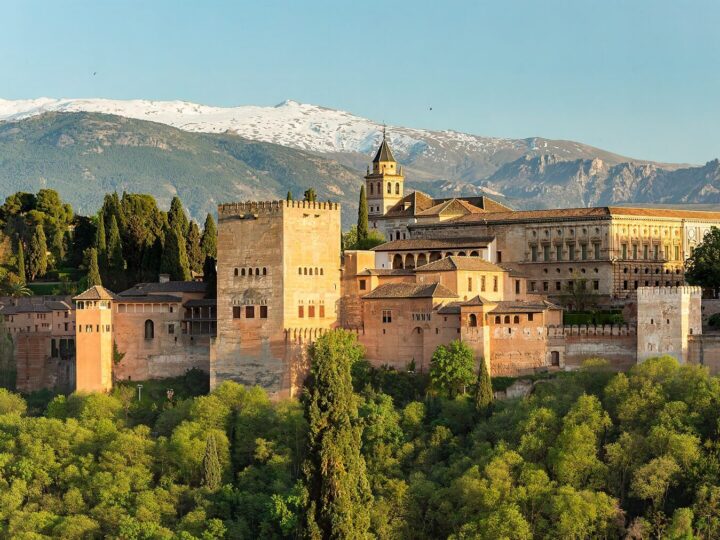
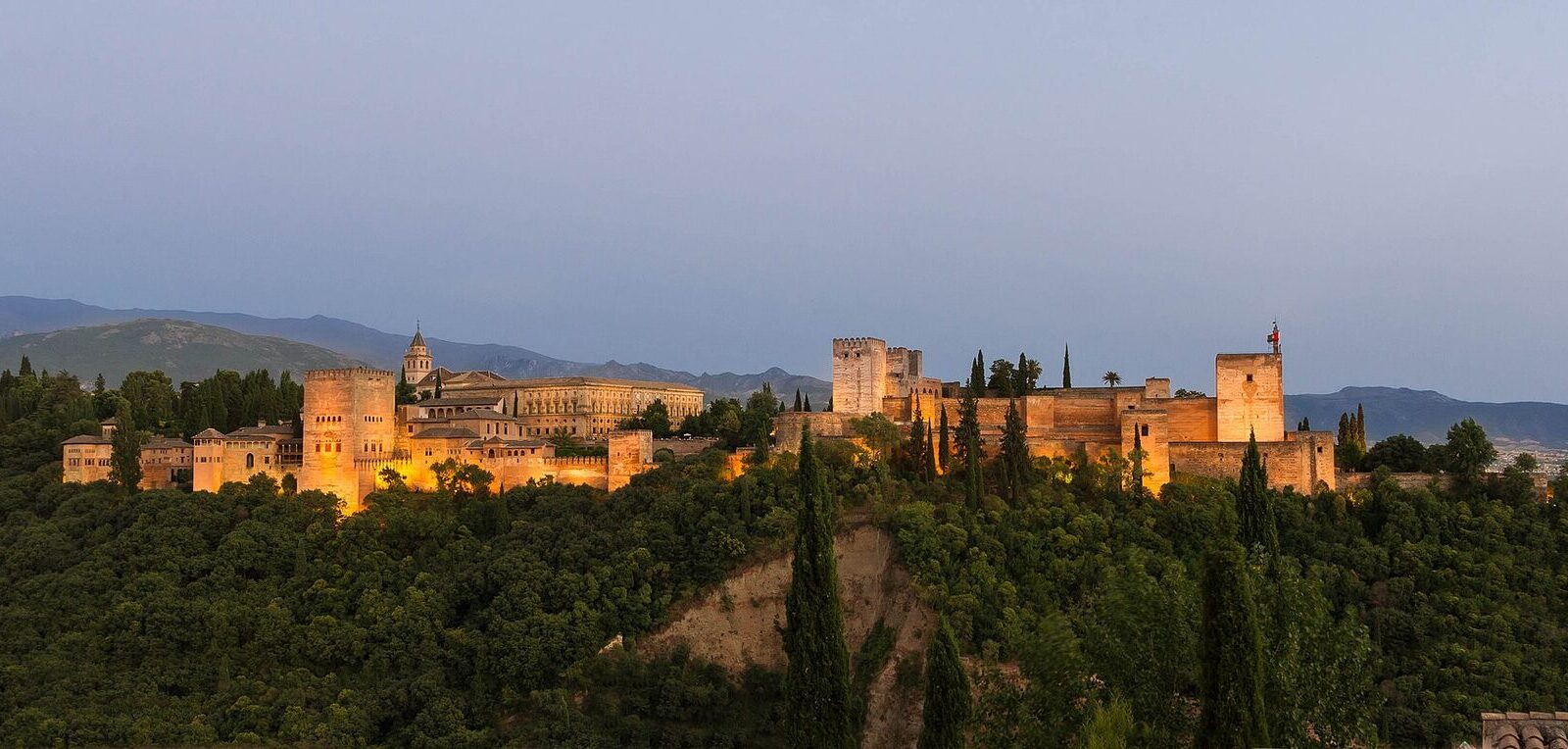
For travellers this means that halal food is not something you have to hunt for across the city. It is concentrated in a few walkable streets at the foot of the Albaicin, a short walk from Plaza Nueva and close to the Alhambra. You will still find plenty of places that serve pork and alcohol, as everywhere in Spain, so it pays to know what to look for.
Where to look: the Albaicin, Calderería Nueva and the teahouses
Calle Calderería Nueva
This narrow pedestrian street climbing from Calle Elvira into the Albaicin is the best-known starting point. It is lined with teterías, Arab-style teahouses, and small shops selling lanterns, spices, ceramics and leather. Many teahouses serve mint tea, fresh juices and Moroccan sweets, and some also serve full meals such as tagines, couscous and grilled meat. Several advertise halal meat, and some display a certificate.
Calle Elvira and the lower Albaicin
Calle Elvira, which runs parallel to the hill near Plaza Nueva, and the lanes around it have more teahouses, kebab shops and North African restaurants. Prices are generally modest and opening hours are long, which helps families after a long day at the Alhambra.
Around the mosque
Up in the upper Albaicin, near the Mirador de San Nicolás and the mosque, there are fewer places to eat, but it is a good area to ask local Muslims for their own recommendations after prayer. A word with people at the mosque is often the most reliable guide to what is halal this year, as restaurants change hands.
Halal kitchens are also spread across other neighbourhoods, from shawarma and kebab shops to Syrian, Lebanese and Pakistani restaurants. Directories such as Zabihah list many of them, but treat community reviews as a starting point, not a guarantee.
How to tell if a restaurant is really halal
A Moroccan name or an Arabic sign does not guarantee that the meat is halal, and “Arab food” in Spain does not always mean Muslim-run. Use these checks in order:
- Look for a certificate from a recognised body. A valid certificate issued by a halal certifier, displayed at the counter or on the wall, is the strongest sign. Check that the name on it matches the business and that it is in date.
- Ask where the meat comes from. A restaurant that serves halal meat will usually tell you its butcher or supplier without hesitation.
- Look at the menu as a whole. If the same kitchen serves pork dishes, ham or bacon, think carefully about cross-contamination, even if the chicken or lamb is halal.
- Check for alcohol. Many teahouses serve none, but some restaurants do. If that matters to you, ask before you sit down.
- When in doubt, choose vegetarian or fish. Spanish cooking has excellent options: grilled fish, Spanish omelette (tortilla de patatas), salads and vegetable stews. Still confirm that no ham, chorizo or lard has been added.
The Instituto Halal seal
The most widely recognised halal certification in Spain is the Halal Guarantee mark of the Junta Islámica, managed by the Instituto Halal, which has an office in Cordoba. It certifies food and drink producers, and in recent years it has also certified restaurants and hotels. Certified businesses may display the mark on their products or premises.
Two things are useful to know:
- A halal certificate can only be issued by the certifying body, never by the business itself. A sign written by the restaurant saying “halal” is a claim, not a certificate.
- The Instituto Halal publishes a directory of certified clients on its website, institutohalal.com, where you can check whether a company holds a current certificate.
Not every honest halal restaurant in Granada is certified: many small Muslim-run places buy meat from halal butchers without paying for their own certification. In those cases, the questions in the next section are your best tool.
What to ask: useful phrases in Spanish
Staff in the Albaicin often speak Arabic or English, but outside that area a few Spanish words help a lot:
- ¿La carne es halal? Is the meat halal?
- ¿Tiene certificado halal? Do you have a halal certificate?
- ¿Lleva cerdo? Does it contain pork?
- Sin jamón, sin chorizo, sin tocino. No ham, no chorizo, no bacon.
- ¿Lleva manteca de cerdo? Does it contain lard? (Worth asking for pastries and some traditional sweets.)
- ¿Lleva vino o alcohol? Does it contain wine or alcohol? (Many Spanish stews and sauces are cooked with wine.)
- ¿Lleva gelatina? Does it contain gelatine? (For desserts and sweets.)
Hotel breakfasts in Granada
Breakfast is where many Muslim travellers in Spain get caught out. A typical hotel buffet includes cured ham (jamón), chorizo, salami-style sausages and bacon, often placed next to the cheese, eggs and bread, sometimes with the same serving tongs.
- Stick to the clearly safe items: fresh fruit, yoghurt, eggs cooked to order, bread, olive oil, tomato, cheese, jams and honey.
- Ask staff to cook eggs separately rather than taking them from a tray next to bacon.
- Be careful with croissants and pastries, which may contain lard, and with sausages labelled as chicken or turkey, which are not halal by default.
- When you book, tell the hotel in writing that you are Muslim and need pork-free food. Some hotels in Spain are used to these requests and some are not, so ask rather than assume.
If you travel with us, tell us how strict your family is about these points, and we will take them into account when we plan your hotels and meals. Our page on halal travel in Spain explains how we approach food, prayer and accommodation.
Frequently asked questions
Is it easy to find halal food in Granada?
Yes. It is one of the easiest cities in Spain, especially in the lower Albaicin around Calle Calderería Nueva and Calle Elvira.
Is all the food in the Granada teahouses halal?
No. Many teahouses serve halal meat, but not all of them. Ask, and look for a certificate before ordering meat.
What is the Instituto Halal?
It is the body that manages the Halal Guarantee mark of the Junta Islámica, the best-known halal certification in Spain. It publishes a directory of certified clients online.
Is there halal food at the Alhambra?
Options on the hill itself are limited. Eat before or after your visit in the Albaicin or the city centre.
Good food is part of what makes a trip to Granada special. If you would like us to build your days around the Alhambra, prayer times and meals you can trust, see our Granada and Alhambra tour or our tailor-made trips. Our team speaks English and Arabic: tell us your dates and we can plan this for you, in shaa Allah.