Seven days is enough to see the four great cities of al-Andalus without rushing: Toledo as a day trip from Madrid, then Cordoba, Seville and Granada, linked by Spain’s high-speed trains. This Muslim Spain itinerary follows the history in roughly the right order, keeps train journeys short and leaves room for the five daily prayers.
Why this order works
Most international flights land in Madrid, and the rail network fans out from there. Starting in the north and finishing in Granada also tells the story of al-Andalus in sequence: Toledo (Tulaytula), a Muslim city from 711 until 1085; Cordoba, capital of the Umayyad emirate and caliphate; Seville, the great city of the Almohads; and Granada, the last Muslim kingdom in the peninsula, home of the Nasrid Alhambra.
Ending in Granada has a practical advantage too. Alhambra tickets are the hardest to get in Spain, and putting it last gives you the most time to secure them. From Granada you can take a direct train back to Madrid or fly home from Malaga or Granada.
The 7-day Islamic Spain tour, day by day
Day 1: Madrid
Arrive, rest and get your bearings. If you land early, the Royal Palace area sits beside the remains of Mayrit, the 9th-century Muslim fortress that gave Madrid its name. For Jumu’ah or any congregational prayer, Madrid has two large mosques: the Islamic Cultural Centre by the M-30 ring road and the Central Mosque (Abu Bakr) in the Tetuan district.
Day 2: Toledo day trip
The Avant high-speed train from Madrid Puerta de Atocha reaches Toledo in about 33 minutes. Spend the day at the Mosque of Cristo de la Luz (Bab al-Mardum), built in 999, the old Bisagra gate with its horseshoe arches and the lanes of the old town. Return to Madrid in the evening. Our Toledo day trip covers this day if you prefer a guide.
Day 3: Madrid to Cordoba
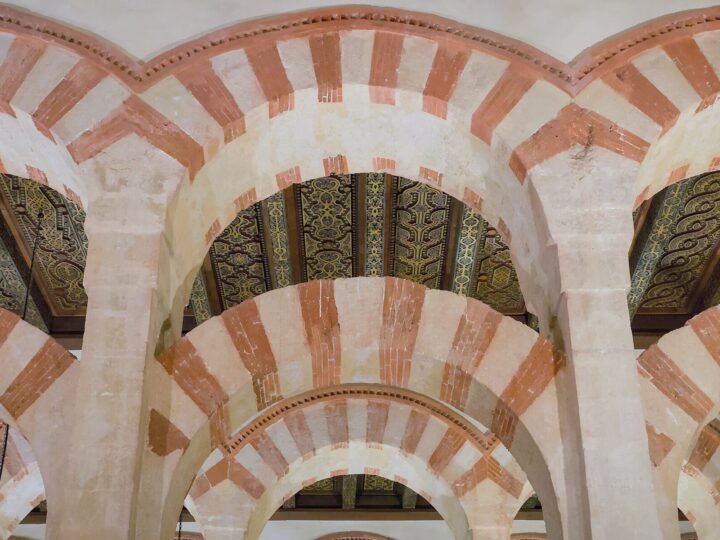
Take a morning AVE south; the fastest trains take around 1 hour 45 minutes. Go straight to the Cordoba Mosque-Cathedral, begun by Abd al-Rahman I in 785. Its forest of red-and-white arches and the mihrab of al-Hakam II are the high point of the trip for many visitors. In the evening, walk the old Jewish quarter and the Roman bridge.
Day 4: Madinat al-Zahra, then Seville
In the morning visit Madinat al-Zahra (Medina Azahara), the palace-city founded by Abd al-Rahman III a few kilometres west of Cordoba and a UNESCO World Heritage Site since 2018. Cars cannot drive up to the ruins: you park at the visitor centre and take the shuttle bus. Check the official opening days before you plan this morning. In the afternoon take the train to Seville, which takes roughly 45 to 55 minutes.
Day 5: Seville
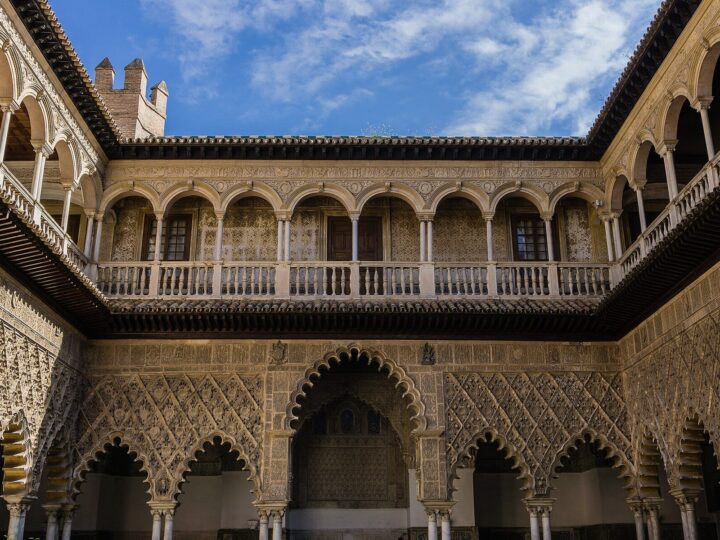
The Giralda bell tower was the minaret of Seville’s Almohad great mosque, and the Patio de los Naranjos beside the cathedral was its ablution courtyard. The Real Alcazar is mostly the work of Christian kings, but it was built by craftsmen trained in Andalusi art, and its courtyards and gardens make the link clear. Finish at the Torre del Oro, an Almohad watchtower on the river.
Day 6: Seville to Granada
The direct train takes around 2.5 hours, and there are only a few direct departures each day, so book early. Spend the afternoon in the Albaicin, the old Muslim quarter. Pray at the Mezquita Mayor de Granada, the city’s main mosque, then watch the sunset over the Alhambra from the Mirador de San Nicolas next door. Calle Calderería Nueva below, with its teterias, is an easy place for mint tea.
Day 7: The Alhambra
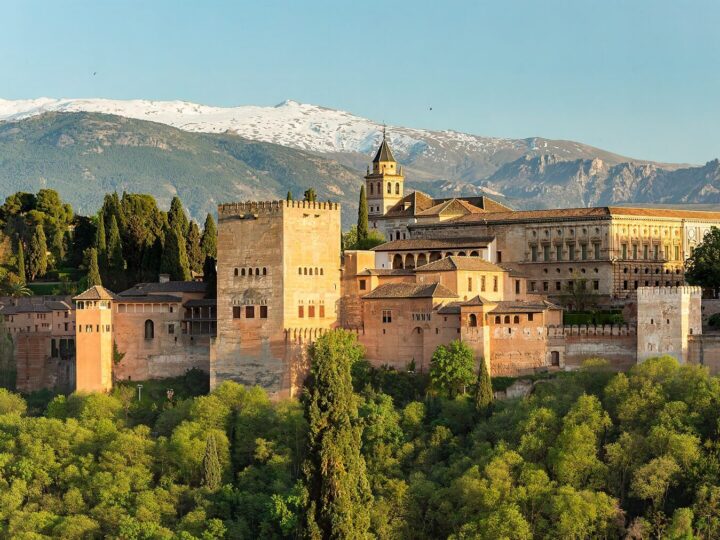
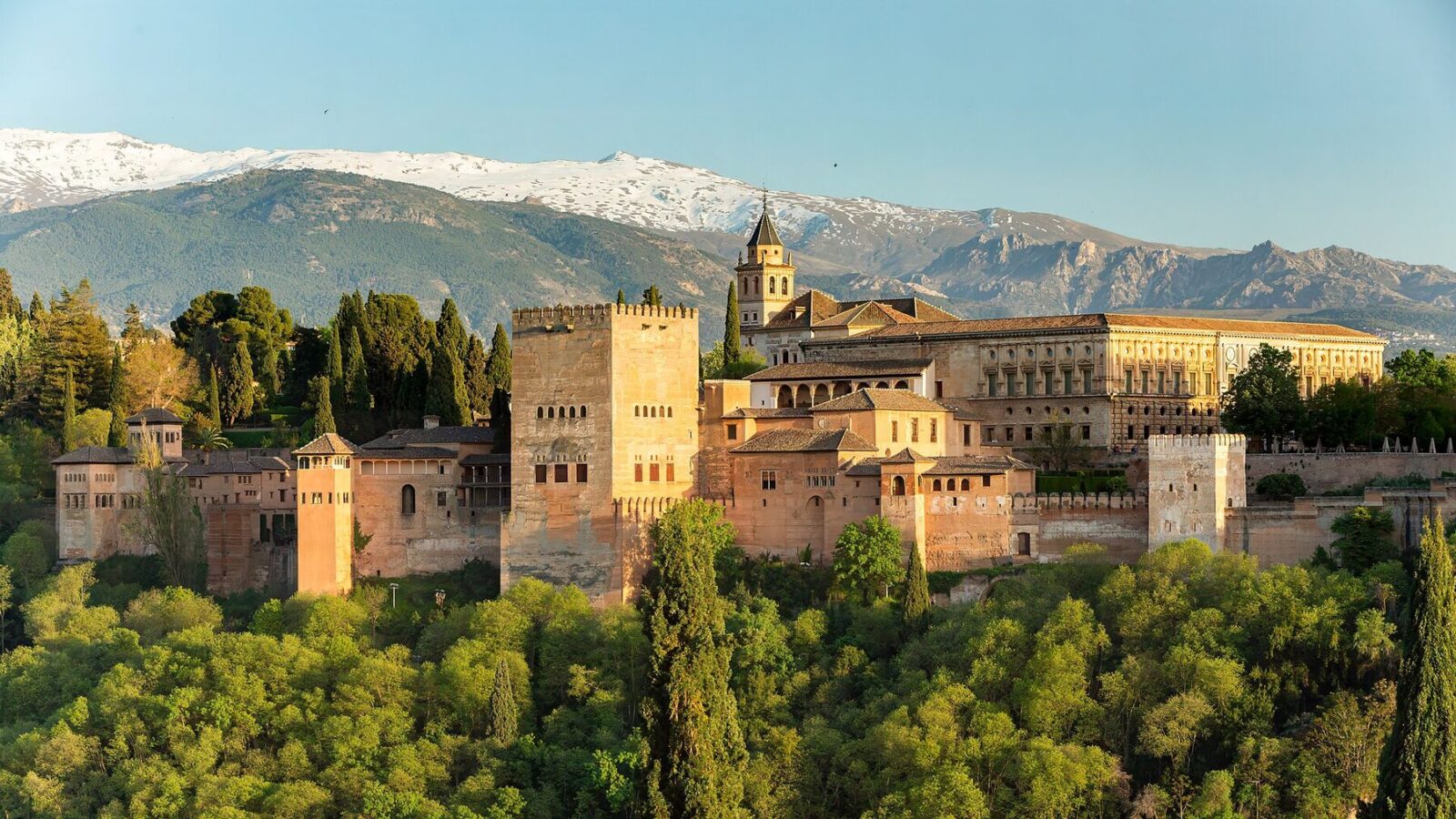
Give the Alhambra a full morning or afternoon: the Nasrid Palaces (entered at a fixed time slot printed on your ticket), the Alcazaba, the Partal and the Generalife gardens. Tickets sell out weeks ahead in busy months; book only through the official Alhambra website or with an authorised tour. The fastest direct trains back to Madrid take around 3.5 hours.
If you want an extra day, Ronda fits well between Seville and Granada. Our al-Andalus Grand Tour follows this same route over eight days, including Ronda.
Getting between cities by train
- Madrid to Toledo: about 33 minutes (Avant, from Puerta de Atocha).
- Madrid to Cordoba: about 1 hour 45 minutes on the fastest AVE trains.
- Cordoba to Seville: roughly 45 to 55 minutes.
- Seville to Granada: around 2.5 hours on the few direct trains; other services involve a change.
- Granada to Madrid: around 3.5 hours on the fastest direct trains.
These are typical times; timetables change, so confirm on Renfe or another operator before you book. Spanish stations run security checks on long-distance trains, so arrive 20 to 30 minutes early, especially with children and luggage.
When to go: heat, Ramadan and crowds
Spring (March to May) and autumn (October and November) are the best months. Cordoba and Seville are among the hottest cities in Europe in July and August, regularly passing 40°C in the afternoon. If summer is your only option, sightsee early, rest after Dhuhr and go out again in the evening.
Ramadan is now in winter. In 2027 it is expected to begin around 8 February, depending on the moon sighting. Days are short and cool, so fasting while travelling is manageable; plan heavier visits in the morning and keep iftar close to your hotel. Easter week (Semana Santa) brings large processions and crowds to Seville and Granada, so book well ahead if your dates overlap.
Planning your prayers
Spain uses Central European Time, so prayer times feel late compared with the UK. In June, Maghrib comes after 9 pm and Isha can fall close to midnight; in winter the day is much more compact. A prayer app with your city set correctly is the easiest guide.
- Muslim prayer is not permitted inside the Cordoba Mosque-Cathedral; visit it as a monument and pray before or after.
- Carry a light travel prayer mat. Gardens such as the Generalife and the riverside parks give quiet corners, but choose discreet spots.
- Combining prayers on travel days (jam’ and qasr) is widely practised; follow your own school and scholars.
- For Jumu’ah, plan to be in Madrid or Granada, where established mosques hold Friday prayer.
For halal food along the route, our halal travel guide explains what to look for in each city.
Travelling as a family
- Two-night stays work better than one-night hops. This itinerary keeps you in Madrid, Seville and Granada for at least two nights each.
- Book seats together on the AVE in advance; when trains are full, it is hard to sit together.
- Strollers are awkward in the Albaicin and Toledo’s steep cobbled lanes; a child carrier is easier.
- The Alhambra and Madinat al-Zahra involve a lot of walking with little shade. Bring water, hats and snacks.
- Children love the gardens, fountains and watchtowers more than long explanations, so keep visits short and stories simple.
Frequently asked questions
Is 7 days enough for Muslim Spain?
Yes, for the four main cities. You will see the essential monuments without rushing. With ten days you can add Ronda, Malaga or a crossing to northern Morocco.
Can I do this itinerary by train only?
Yes. Every leg is served by direct trains, though Seville to Granada has only a few direct departures a day. Madinat al-Zahra is the one site that needs a taxi, bus or tour from Cordoba.
Which city should I skip if I have less time?
With five days, drop Madrid and Toledo and focus on Cordoba, Seville and Granada, as in our Golden Triangle tour.
Is Spain comfortable for Muslim families?
Generally yes. Hijab is a familiar sight in Andalusian cities, and Granada in particular has a visible Muslim community, mosques and halal restaurants.
Every family travels differently. Tell us your dates, who is coming and how you like to pace your days, and we can plan this route for you as a private or small-group trip. Our team speaks English and Arabic. Start with our tailor-made trips or contact us.