Travel guides
Islamic Toledo: A Guide to Tulaytula, Its Mosque and a Day Trip from Madrid
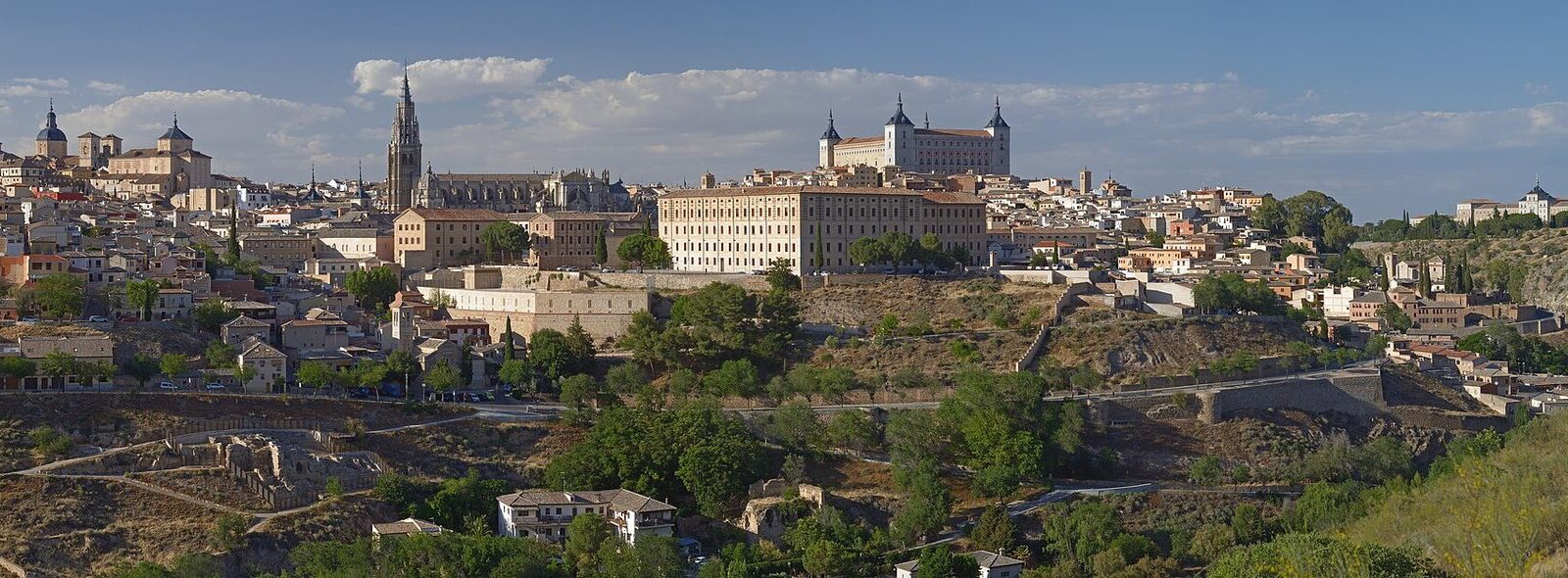
Islamic Toledo, known in Arabic as Tulaytula, was a Muslim city for almost four centuries, from 711 to 1085. Its finest survivor is the small Mosque of Cristo de la Luz, built in 999 as the Bab al-Mardum mosque, and the whole old town can be seen in a day trip from Madrid, just over half an hour away by high-speed train.
Tulaytula: a short history
Toledo was the capital of Visigothic Spain when Muslim forces under Tariq ibn Ziyad took it in 711. Under the Umayyads of Cordoba it was a frontier city facing the Christian north, proud and often rebellious. When the caliphate broke up in the early 11th century, Toledo became the seat of an independent taifa kingdom ruled by the Banu Dhi al-Nun, and for a few decades it was one of the richest courts in al-Andalus. The astronomer al-Zarqali (known in Europe as Arzachel) worked here, and the astronomical tables produced in Toledo were used across Europe for generations.
In 1085, after a siege, the last taifa king Yahya al-Qadir surrendered the city to Alfonso VI of Castile. The surrender terms promised Muslims their lives, property and freedom of worship, and many stayed. The main mosque was later replaced by the Gothic cathedral, which stands on its site. For the wider story, see our page on the history of al-Andalus.
The Mosque of Cristo de la Luz (Bab al-Mardum)
This is the reason most Muslim visitors come to Toledo. It is a small, almost square building of brick and stone, named after Bab al-Mardum, the city gate it stood beside. Inside, four columns with reused capitals, some of them Visigothic, carry horseshoe arches that divide the space into nine bays, each covered by a different ribbed vault. The patterns of the vaults and the brickwork of the façade echo the extension of the Cordoba mosque built by al-Hakam II a few decades earlier.
The foundation inscription
Across the south-west façade runs a Kufic inscription laid in brick. It dates the completion of the mosque to Muharram 390 AH, which corresponds to the turn of 999 and 1000 CE, and names Musa ibn Ali as the builder. In the usual reading it also records that Ahmad ibn Hadidi paid for the mosque from his own wealth, seeking reward from Allah in Paradise. Specialists still debate that one name because the brick is worn, but the date and the builder are clear. It is rare to stand in front of a mosque in Spain that still tells you, in its own words, when and by whom it was built.
After 1085
Tradition says Alfonso VI’s first Mass in Toledo was held here. In 1186 the building was given to the Knights of the Order of St John, who added a semicircular apse in Mudejar style on the east side. That addition removed the original qibla wall and mihrab, which is why the building today faces a Christian apse. The visit is short, around half an hour, and tickets can be booked through the Toledo Monumental ticket website. It is a historic monument, not a place of Muslim prayer today.
The old Bisagra gate
Most visitors walk through the large Renaissance Puerta de Bisagra Nueva, built in the 16th century, and miss its older neighbour a few minutes away. The Puerta Antigua de Bisagra, also called the gate of Alfonso VI, dates from the Muslim period and is generally considered the best-preserved part of Toledo’s Islamic walls. Look for its horseshoe arches in stone: it was one of the main entrances to Tulaytula. Tradition holds that Alfonso VI entered the city through it in 1085.
Elsewhere in the old town you can also find the small former mosque of Las Tornerías, another reminder that Toledo once had many neighbourhood mosques.
Living together and the Toledo translators
After 1085, Toledo held Christians, Muslims (later called Mudejars) and Jews, and many of its Christians, the Mozarabs, spoke and wrote Arabic. This mix of languages made the city Europe’s great translation centre. From the 12th century, under Archbishop Raymond, scholars working in Toledo translated Arabic works of philosophy, astronomy, medicine and mathematics into Latin, often with a Jewish or Mozarab scholar rendering the Arabic aloud and a Latin scholar writing it down. Gerard of Cremona, the best known, translated dozens of works, among them Ptolemy’s Almagest from its Arabic version.
In the 13th century King Alfonso X, “the Wise”, moved this work into Castilian. Historians today note that there was no single school building; “the Toledo School of Translators” is a name for this long movement. It is one of the main routes by which the learning of Baghdad and Cordoba reached the rest of Europe.
The idea of convivencia, peaceful coexistence, is often romanticised, and life for religious minorities could be hard. But in Toledo’s lanes you can still see what that shared world produced, from Mudejar brick towers to medieval synagogues built in the same Mudejar style.
How to visit Islamic Toledo on a day trip from Madrid
- Train: the Avant high-speed service from Madrid Puerta de Atocha takes about 33 minutes. Book a few days ahead at weekends and holidays.
- From the station: Toledo’s station, itself a neo-Mudejar building, is outside the old town. Take a taxi or city bus up the hill, or walk about 20 to 25 minutes.
- Route: start at the Puerta de Bisagra gates, walk up to the Mosque of Cristo de la Luz, then continue to the cathedral, the Jewish quarter and the views over the Tagus.
- Prayer and food: pray Dhuhr before you set off or combine prayers if you follow that practice on travel days. Toledo has fewer halal options than Madrid, so many visitors eat lunch at vegetarian or fish places, or bring food; our halal travel guide explains what to ask.
- Comfort: the old town is steep and cobbled. Wear good shoes and avoid midday in July and August.
Our Toledo day trip from Madrid covers this route with a guide, and Toledo is also the first stop of our al-Andalus Grand Tour.
Frequently asked questions
Can Muslims pray in the Mosque of Cristo de la Luz?
No. It is managed as a historic monument and has had a Christian apse since the 12th century. Plan your prayers before or after the visit.
How long do I need in Toledo?
One full day is enough for the Islamic sites and the old town. Stay overnight if you want to see the city lit up at night and visit at a slower pace.
Is Toledo suitable for children and older travellers?
Yes, but the hills are steep. Use taxis for the climbs and keep visits short.
What does Tulaytula mean?
It is the Arabic form of the Latin name Toletum, used throughout the Muslim period.
If you would like to see Islamic Toledo with someone who knows its history, tell us your dates and group size and we can plan the day for you, privately or in a small group. Our team speaks English and Arabic. Contact us to start.