Andalusia works very well for a Muslim family holiday. The Islamic history of al-Andalus is all around you, halal food and mosques are within reach in the main cities, and the coast is a short drive away. The secret is pace: shorter sightseeing days, a pool in the afternoon, and dates chosen to avoid the worst of the summer heat.
When to go: fitting Andalusia into UK school holidays
Most families are tied to school dates, and each holiday gives a very different trip. Dates vary by council and by nation, so check your own school’s calendar.
- February half-term. Mild days, cool evenings and few crowds. Good for city sightseeing; too cold for most children to swim outdoors.
- Easter holidays. One of the best times. Orange blossom in Seville and Cordoba, pleasant temperatures and long days. Holy Week (Semana Santa) processions fill city centres and push up hotel prices, so check whether your dates overlap.
- May half-term. Warm, sunny and often the sweet spot for a city-and-beach trip. The sea is still fresh but pools are inviting.
- Summer holidays. In England and Wales, roughly late July to early September; in Scotland, from late June to mid-August. Inland Andalusia is very hot in July and August, and Seville and Cordoba often pass 40°C. Visit monuments early in the morning, rest in the afternoon, and spend more nights on the coast or in Granada, which is cooler at night.
- October half-term. Warm days, calmer coast and comfortable sightseeing. A very good choice for families with younger children.
- Christmas. Quiet at the monuments and lovely winter light, but short days and cold evenings in Granada.
Popular weeks sell out early, especially Alhambra tickets and villas with pools. If you know your dates, plan several months ahead.
Pace: how to travel with children
Adult itineraries try to see three cities in three days. With children, that ends in tears. A rhythm that works for most families:
- One main visit a day. The Alhambra in the morning, then lunch, rest and the pool. The Albaicin at sunset for Maghrib.
- Two or three bases rather than daily hotel changes. For example, Granada for three nights, a coastal base for four, and Cordoba or Seville for two.
- Spanish hours help. Spanish families eat late and stay out in the cool of the evening, and children are welcome in squares and restaurants until late.
- Plan around prayers and meals. In summer, Maghrib falls after 9 pm. A long afternoon break makes late evenings easier for children and for you.
- Keep transfers short. Malaga airport is the natural entry point, with Granada, Cordoba and the Costa del Sol all within reach. Our Golden Triangle tour links the three great cities over five days.
Where to stay: villas and private pools
For many Muslim families, a rented villa or house with a private pool is the most comfortable choice. You control the food, you can pray together without hunting for space, and everyone can swim in privacy. Andalusia has many of them, from village houses near Granada to villas on the Costa del Sol and in the hills behind it.
When choosing a property, ask:
- Is the pool private, or shared with other houses?
- Is the pool overlooked by neighbours or a road?
- Is there a full kitchen, and is there a halal butcher or a supermarket nearby?
- Is the house in a city, a village or the countryside, and do you need a car?
Hotels are easier for short city stays. For hotel breakfasts, ask in writing for pork-free food in advance; our guide to halal travel in Spain explains what to watch for.
Islamic history children will enjoy
Children connect with al-Andalus more easily through places and stories than through dates. Some ideas:
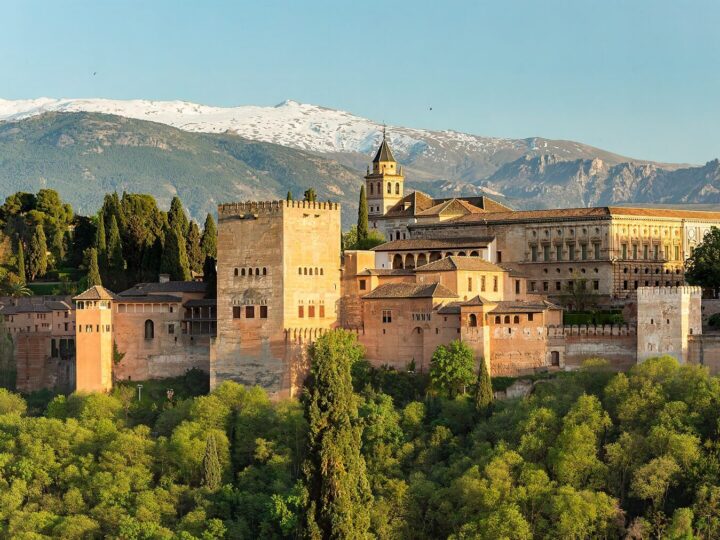
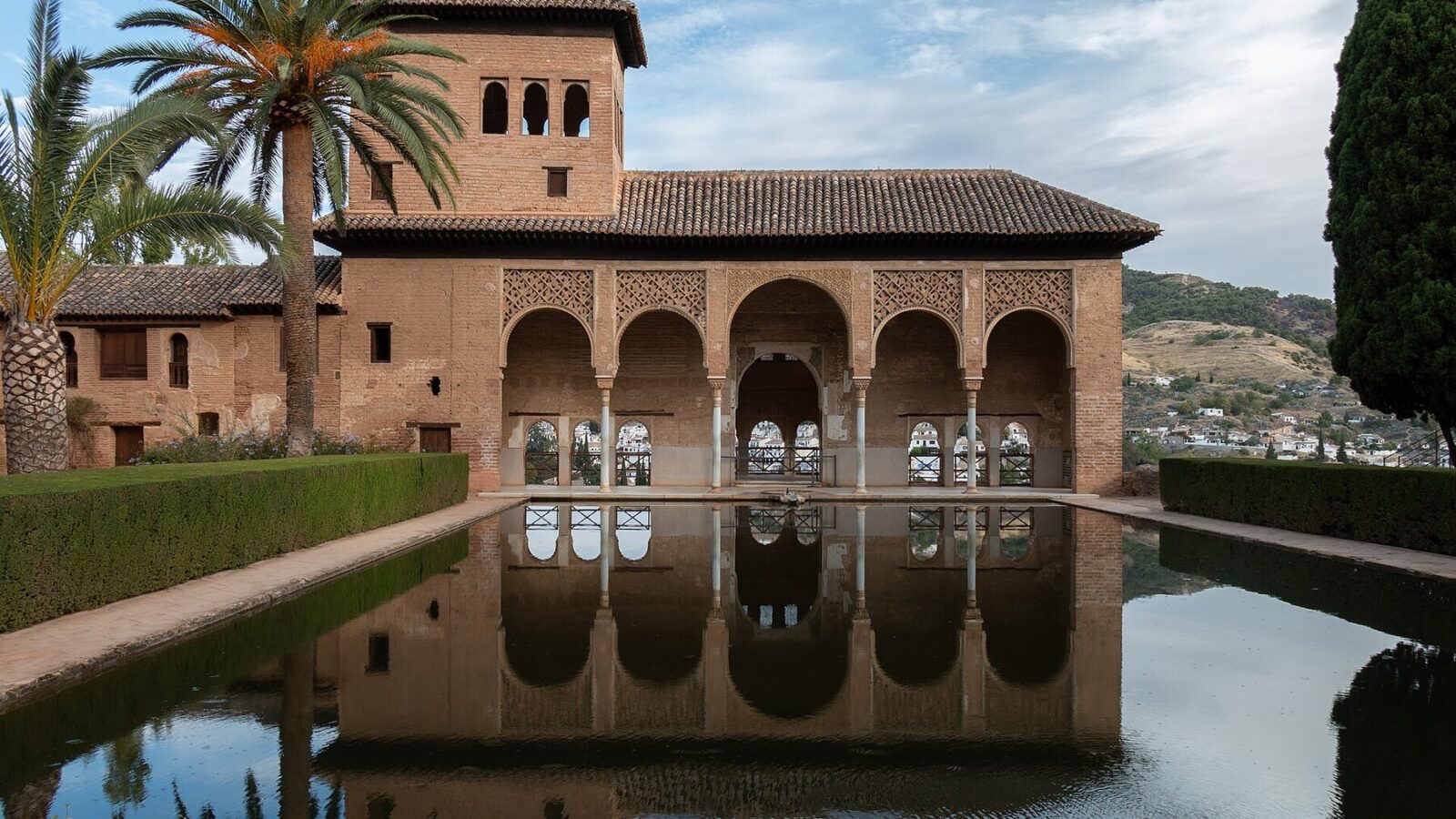
- The Alhambra, Granada. Courtyards, fountains, towers and the Generalife gardens. Tell them the story of the Nasrid sultans and look for wa la ghaliba illa Allah on the walls; it becomes a game. Book through the official Alhambra website and check the rules for children’s tickets. Our Alhambra guide has more.
- The Albaicin and the Great Mosque of Granada. Narrow lanes to explore, mint tea in Calle Calderería Nueva, and prayer in the mosque garden facing the Alhambra.
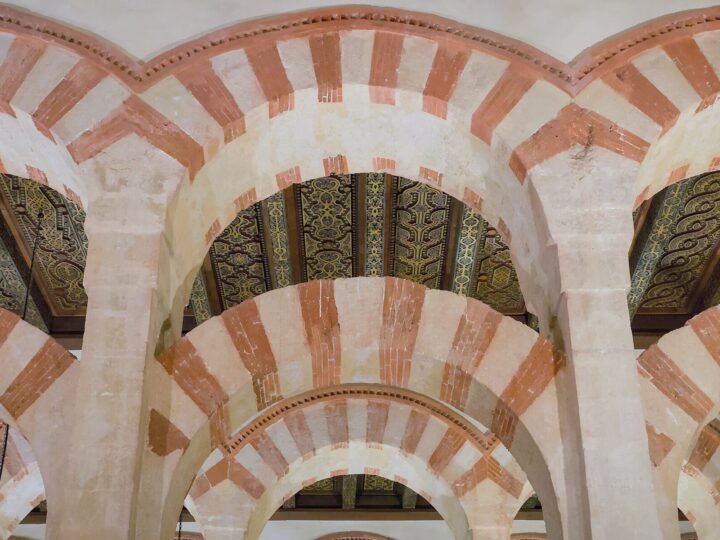
- The Cordoba Mosque-Cathedral. Children remember the forest of red and white arches. Prayer is not allowed inside, which is worth explaining calmly beforehand.
- Madinat al-Zahra, Cordoba. The ruined palace-city of the caliphs, with a museum and space to walk. Good for older children who like archaeology.
- The Torre de la Calahorra, Cordoba. A medieval tower at the end of the Roman bridge with a museum about al-Andalus and the scholars of Cordoba.
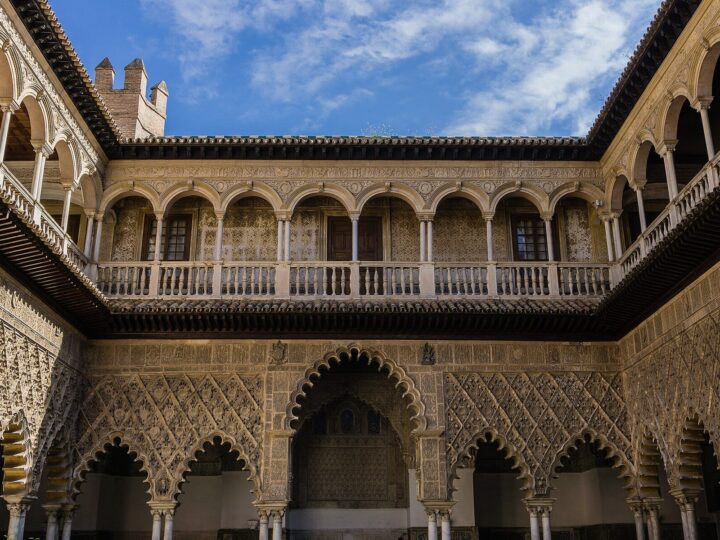
- The Alcázar of Seville. Big gardens, fountains and courtyards; a good visit to run off some energy.
- The Alcazaba of Malaga. A fortress-palace from the Islamic period climbing the hill above the city, easy to combine with a beach day.
Beaches and quieter swimming
The Costa del Sol around Malaga is the easiest coast for families: good facilities, halal restaurants and mosques in Malaga and Marbella, and a short drive to Granada. East of Malaga, Nerja and the Costa Tropical around Almuñécar and Salobreña have smaller beaches and coves and are about an hour from Granada.
For a quieter beach day:
- Go early in the morning, before the crowds and the heat, and leave by lunchtime.
- Avoid Sundays and public holidays in July and August, when local families also head for the sea.
- Choose beaches with lifeguards and facilities rather than isolated coves, especially with small children.
- Some beaches in Spain are designated naturist beaches. They are signposted, but it is worth checking before you set off for an unfamiliar beach.
Modesty at beaches and pools
Many Muslim families wonder whether modest swimwear is accepted in Spain. There is no single national rule. On Andalusian beaches you will see people swimming in all kinds of clothing, including full-coverage swimwear, and it does not draw much attention.
Public and hotel pools are different, because each one sets its own swimwear rules, usually for hygiene reasons. Most accept modest swimwear made for swimming, but some public pools have turned it away. If you plan to use a hotel or public pool, ask before you book or arrive. This is the main reason many families choose a villa with a private pool: no questions and complete privacy.
Away from the water, Andalusia is relaxed. Headscarves and modest clothing are common sights in Granada, Malaga and on the coast, and you are unlikely to feel out of place.
Frequently asked questions
Is Andalusia good for a Muslim family holiday?
Yes. It combines Islamic heritage, a beach coast, halal food in the main cities and mosques in Granada, Cordoba, Seville, Malaga and Marbella.
When is the best time to go with children?
Easter, May half-term and October half-term offer the best balance of warm weather and comfortable sightseeing. July and August are very hot inland.
Can I wear a burkini in Spain?
There is no national ban, and full-coverage swimwear is common on beaches. Pools set their own rules, so ask in advance or choose a private pool.
Where is the best base for a family?
Many families combine a few nights in Granada with a longer stay on the Costa del Sol, and add Cordoba or Seville if time allows.
Every family travels differently. Tell us the ages of your children, your school holiday dates and how you like to travel, and we can plan this for you as a tailor-made family trip, or adapt our Granada and Alhambra tour or Al-Andalus Grand Tour to your pace. Our team speaks English and Arabic: get in touch, in shaa Allah.