A Spain and Morocco trip is easier than many people think: from Tarifa or Algeciras a ferry reaches Morocco in roughly one to one and a half hours, and British and EU travellers do not need a visa for a tourist stay. The route from Seville across the Strait to Tangier, Chefchaouen and Fez follows the same path that scholars, traders and later Andalusian refugees took for centuries. Here is how to plan it.
Why combine al-Andalus and Morocco
For most of the history of al-Andalus, the two shores of the Strait of Gibraltar were one world. The armies of Tariq ibn Ziyad crossed from North Africa in 711, and the rock of Gibraltar still carries his name (Jabal Tariq). Later the Almoravids and Almohads ruled from Marrakesh over much of Muslim Spain, and the Giralda in Seville is a sister of the Kutubiyya minaret.
The link continued after the fall of the Andalusian cities. Fez has an Andalusian quarter, named after families from Cordoba who settled there in the early ninth century, and its Andalusian Mosque was founded in 859. Chefchaouen was founded in 1471 and received many Muslim and Jewish families from Granada and other parts of Spain after 1492. Travelling from Seville to Fez lets you see the story from both sides: the monuments that survived in Spain, and the living Muslim cities where Andalusian families carried their names, music and crafts.
There is also a practical benefit. In Spain, Muslim visitors see the great mosques as monuments where prayer is not allowed. In Morocco you can pray in mosques that have been in use for centuries, hear the adhan across the medina and find halal food everywhere.
Crossing the Strait: the ferry routes
Two routes matter for most travellers.
- Tarifa to Tangier Ville. The short crossing takes about one hour, according to the operator Baleària, though weather can change that. Its great advantage is that Tangier Ville port sits next to the city, within reach of the medina. This is the best option for foot passengers. Baleària took over this route in May 2025, when DFDS (formerly FRS) left it.
- Algeciras to Tanger Med. The crossing takes about one hour thirty minutes on the faster ships, with some sailings slower. Tanger Med is a large port around 40 kilometres east of Tangier, so you need a transfer of roughly 40 minutes by road to reach the city. This route has more daily departures and suits travellers with a car.
A few tips that make the crossing calmer:
- Arrive at the port well ahead of departure; operators recommend about 90 minutes.
- Spanish passport control happens in the terminal before boarding. Moroccan passport formalities are often done on board during the crossing, so listen to the announcements and join the queue early.
- The Strait is windy. When the wind is strong, sailings can be delayed or cancelled, so do not plan a tight connection on the same day as the crossing.
- Check the timetable with the operator close to your travel date, as schedules change by season.
Passports and entry rules for UK and EU travellers
British citizens can visit Morocco without a visa for up to 90 days for tourism. The UK government’s official travel advice for Morocco says your passport must be valid for at least three months after the date you arrive and must not be damaged, as Moroccan officials have refused entry to travellers with damaged passports. Make sure your passport is stamped when you enter.
EU citizens also travel to Morocco visa-free as tourists, but check your own foreign ministry, because the rules on passport validity are not stated the same way by every country. Spain’s foreign ministry, for example, asks for a passport valid for more than six months and notes that the Spanish national identity card is not accepted for entry. Our advice for everyone: travel with a passport valid for at least six months after your trip.
Two more points:
- Coming back from Morocco, you re-enter the Schengen area. British travellers should keep track of the 90 days in any 180 days allowed in Schengen, and expect fingerprint and photo registration under the EU’s Entry/Exit System at the border.
- Rules change. Check official sources a few weeks before you travel, and again just before.
A sample itinerary: Seville, Tarifa, Tangier, Chefchaouen and Fez
This is the outline we use most often for a first Spain and Morocco trip. It works well in about ten days.
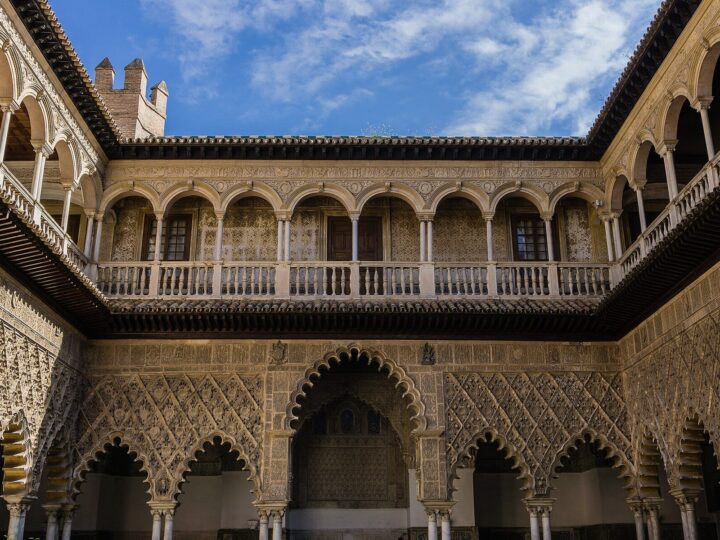
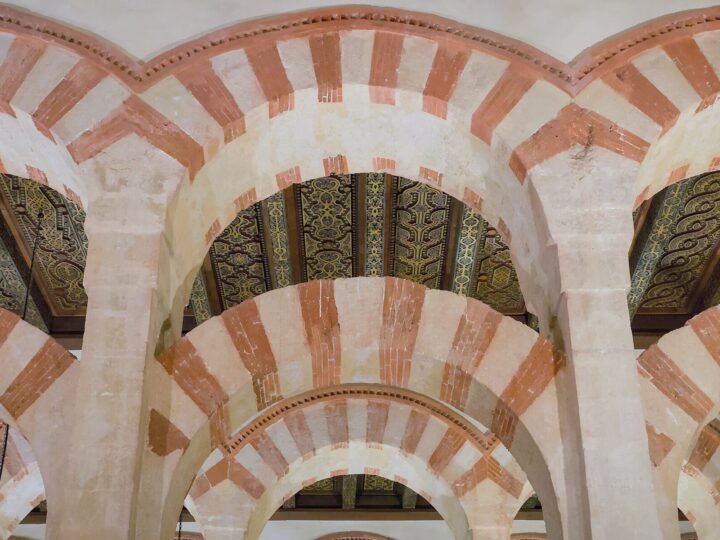
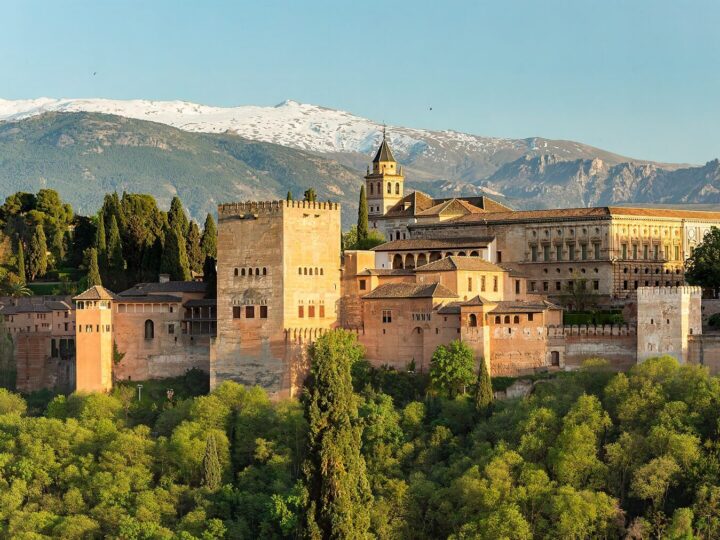
- Seville (2 days). The Real Alcazar, the Giralda and the cathedral that stands on the site of the Almohad great mosque, the old Jewish quarter and the river. Our guide to Seville’s Islamic heritage covers what to see. If you have time, add Cordoba or Granada before Seville.
- Seville to Tarifa (half a day). Allow around two to two and a half hours by road. Tarifa is a small walled town at the southern tip of Europe, named after Tarif ibn Malik, who led a raid across the Strait in 710. On a clear day you can see the Moroccan mountains from its walls.
- Ferry to Tangier (1 day). Cross in the morning and spend the day in the medina, the kasbah and the viewpoints over the Strait. Tangier is the city of Ibn Battuta, who was born here in 1304.
- Tangier to Chefchaouen (2 days). The drive into the Rif mountains takes around two and a half to three hours. Chefchaouen’s blue lanes are best early in the morning, before day visitors arrive. Walk up to the Spanish Mosque on the hill at sunset for the view over the town.
- Chefchaouen to Fez (3 days). Count on about four to four and a half hours by road. Fez el-Bali is one of the largest car-free medinas in the world. The al-Qarawiyyin mosque, founded in 859 by Fatima al-Fihri, and the Andalusian quarter across the river are the heart of the visit. Give yourself time; Fez rewards slow days.
From Fez you can fly home, as the city has an international airport with routes to Europe (they change by season), or continue to Meknes, Rabat or Marrakesh.
Prayer, food and pace
In Spain, plan the day around prayer times and pray at your hotel or at local mosques where they exist; our halal travel page explains how to find halal food in Andalusia. In Morocco this becomes much easier. Remember that Morocco keeps a different clock from Spain for part of the year and changes its time during Ramadan, so check local prayer times when you arrive rather than relying on Spanish times.
Do not rush: the crossing, the mountain roads and the medinas all take longer than the map suggests.
Travelling with us
Our private Al-Andalus and Morocco tour joins the great cities of Muslim Spain with Tangier, Chefchaouen and Fez in ten days, with the crossing and transfers arranged. If you have less time on the Spanish side, the Golden Triangle tour covers Cordoba, Seville and Granada in five days and can be adapted to end at the Strait. We can also build a tailor-made route around your dates and your family.
Frequently asked questions
How long is the ferry from Spain to Morocco?
About one hour from Tarifa to Tangier Ville and about one hour thirty minutes from Algeciras to Tanger Med on the faster ships. Weather and the vessel can change these times.
Do UK citizens need a visa for Morocco?
No. British citizens can visit for up to 90 days for tourism. The UK government says your passport must be valid for at least three months after arrival; we recommend six.
Can I enter Morocco with an EU identity card?
Plan to travel with a passport. Spain’s foreign ministry, for example, states that the Spanish identity card is not accepted for entry. Check your own country’s advice.
Is Tarifa or Algeciras better for crossing?
Tarifa is better on foot, because the ferry arrives in the centre of Tangier. Algeciras has more sailings and suits drivers, but Tanger Med is around 40 kilometres from the city.
Crossing from al-Andalus to Morocco is one of the most meaningful journeys a Muslim traveller can make in this part of the world. Tell us your dates and how many of you are travelling through our contact page, and our team, who speak English and Arabic, will help you plan it.